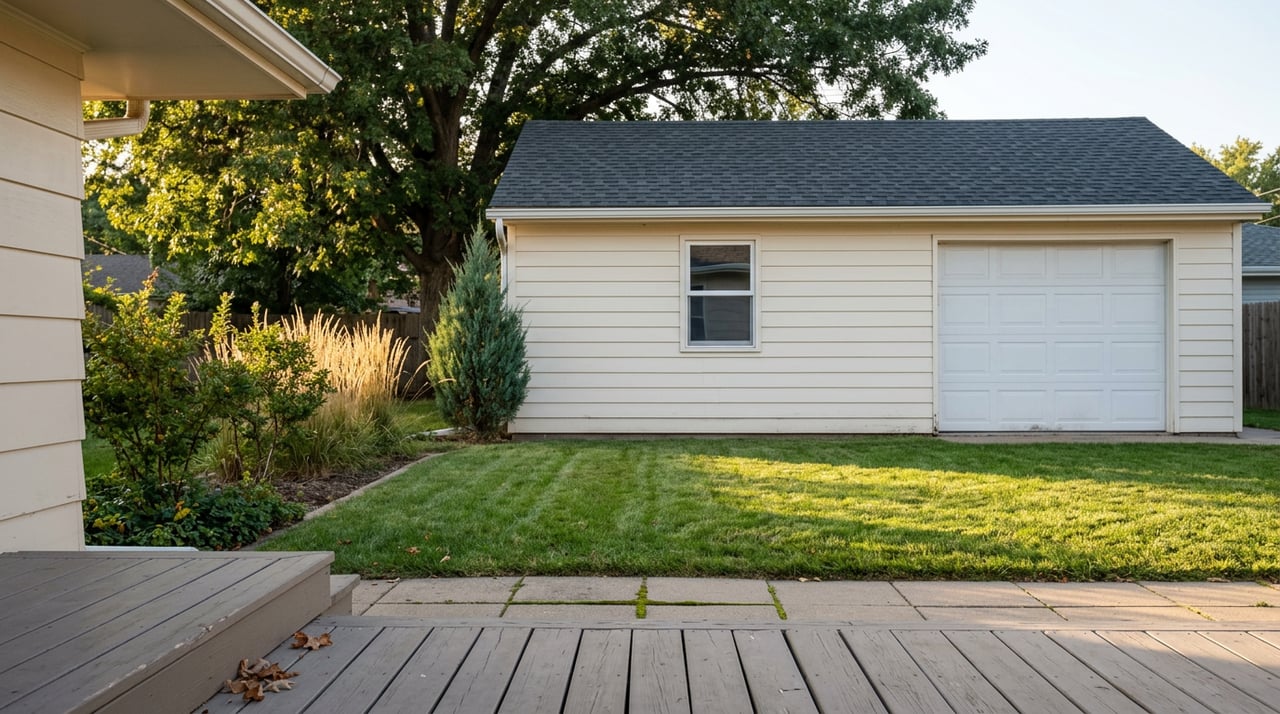
Ask around Denver this summer and you'll hear some version of the same headline: the city made accessory dwelling units legal on every residential lot. Neighbors are already picturing a carriage house over the garage, or a studio tucked behind the main house, rented out to help cover the mortgage. The zoning map really did open up. What most homeowners haven't worked out yet is that legality was never the hard part. The hard part is whether a specific lot has the depth, the coverage room, and the shape to actually fit one.
That distinction changes who benefits from the reform and who doesn't. A seller with a deep lot and alley access in an older Denver neighborhood is sitting on real, usable value right now. A seller two blocks over with a shallow or oddly shaped lot may not be, no matter what the zoning designation technically allows.
What the December 2024 Change Actually Did
Denver's citywide ADU zoning text amendment took effect December 16, 2024, eliminating the old neighborhood-by-neighborhood patchwork that used to force many homeowners into a formal rezoning process just to add a granny flat. The city's own zoning code page confirms the current framework: ADUs are allowed in every residential zone district, attached or detached, with no owner-occupancy requirement standing in the way of renting the unit out.
Colorado backed this at the state level with HB24-1152, which the state's Division of Local Government administers. The law requires qualifying cities, Denver included, to allow at least one ADU wherever a single-unit detached dwelling is already permitted, reviewed through an administrative process rather than a public hearing. It also does something homeowners in HOA neighborhoods should know cold: it voids blanket HOA bans on ADUs. An HOA can still apply the same siding, roofline, or color standards it applies to the primary home. It cannot use those standards, or an outright prohibition, to stop an ADU it simply doesn't want.
None of that tells you whether your yard can hold one.
The Rule That Actually Decides Your Lot
Denver's ADU size limits scale with lot size, and the ceiling is lower than most people assume. A detached ADU tops out at 1,000 square feet, but only on lots larger than 7,000 square feet, with smaller lots scaling down proportionally. Run a typical Denver bungalow lot through the rear 35 percent depth rule and the bulk plane analysis, and the math tends to land in the 245 to 735 square foot range, well short of the full 1,000 feet the zoning code technically allows.
| Scenario | Typical max detached ADU |
|---|---|
| Standard Denver bungalow lot, after setbacks and bulk plane | 245 to 735 sq ft |
| Lot larger than 7,000 sq ft | Up to 1,000 sq ft |
Size isn't the only constraint. Denver requires detached ADUs to sit within the rear 35 percent of the zone lot's depth, and caps height at 24 feet or 1.5 stories under the bulk plane standard for that zone. Bulk plane is the geometry that governs how far back and how steeply a structure can rise before it starts encroaching on a neighbor's light, and it's the most common reason an ADU that looked fine on a napkin sketch gets redrawn during permitting. Lot coverage limits, typically 37.5 to 50 percent depending on zone district, count the ADU footprint against the same cap as the house and garage. A property with a large house and a two car garage may simply be out of coverage room, regardless of what the zoning map says is theoretically allowed.
If you're evaluating a listing with ADU potential in mind, the zoning designation is step one. The lot's actual depth, its existing coverage, and whether it has alley access, which affects how setbacks are calculated, are steps two through four. Skipping straight to step one is how buyers end up disappointed after closing.
The Fee That Already Changed
Zoning approval is not the only cost gate, and this one moved recently. Denver Water charges a separate System Development Charge for any new ADU tap, and that fee increased on July 1, 2026. Through June 30, 2026, the charge was $2,055 for properties inside Denver and $2,870 for properties outside the city. As of this writing, it sits at $2,170 inside Denver and $3,030 outside. Anyone who priced out an ADU last spring is now working from an outdated number, and it's exactly the kind of line item a rough contractor estimate can miss if the quote predates July.
What the Reform Didn't Touch
Two restrictions survived both the 2024 zoning change and the 2026 fee update intact, and both matter for anyone weighing an ADU as a rental strategy rather than a family use project.
Short-term rental in Denver still requires the host's primary residence to be on the property. Owner-occupancy was removed as a barrier to long-term ADU rentals, but a pure investment play, buying a property specifically to run both the main house and the ADU as short-term rentals with no one living there, is not an option under current licensing rules.
HOA aesthetic review didn't go away either. A covenant that requires brick exteriors or a specific roof color on the primary home can require the same on an ADU. What the HOA lost is the ability to say no altogether.
The Permitting Clock Sellers Should Plan Around
Denver's Community Planning and Development office has set a 180-day target for residential permit review in 2026, but the realistic range for an ADU, from application to issued permit, runs closer to four to seven months once backlog and resubmittal cycles are factored in. That timeline matters for two kinds of sellers specifically. Anyone marketing a lot's ADU potential as a selling point should be candid that a buyer won't be moving a tenant in within a season. And anyone mid-permit who is also trying to sell should build that runway into their listing plan rather than assuming a fast close.
Why This Matters More in Today's Market
Over the three months ending May 2026, the median Denver home sold for $635,000, about 2.5 percent above the same period a year earlier, with homes typically going under contract in around 18 days and buyers submitting an average of two offers. That's a competitive market, but not the frenzied, waive every contingency market of a few years back. Buyers today have enough room to actually evaluate a lot's ADU potential rather than take a listing description at its word, and sellers who can point to a real, lot specific ADU case, not just a zoning designation, have a genuine differentiator to work with rather than a talking point that falls apart under a second look.
That's the shift worth understanding before you list or write an offer. The zoning reform changed what's legal almost everywhere in the city. It didn't change what physically fits on any particular lot, and it didn't freeze the fees attached to building one. Both of those numbers are worth checking against the actual parcel, not the citywide headline, before anyone builds a pricing strategy or a renovation budget around them.
Frequently Asked Questions
Does every residential lot in Denver now qualify for an ADU? Every residential zone district allows ADUs following the December 2024 amendment, but lot size, existing coverage, and the setback and bulk plane rules still determine whether a specific parcel can physically fit one and how large it can be.
Can an HOA still block an ADU in Denver? Not outright. HB24-1152 voids blanket ADU bans in HOA covenants. An HOA can still enforce the same design standards already applied to the primary home, things like materials, colors, and rooflines.
Is it legal to buy a Denver property purely to run the house and an ADU as short-term rentals? No. Denver's short-term rental licensing still requires the property to be the host's primary residence, so a pure investment short-term rental setup with no one living on site is not permitted under current rules.
If you're trying to figure out whether a specific Denver lot actually pencils out for an ADU, or you're listing a property where that potential could matter to the right buyer, this is exactly the kind of block-by-block detail worth walking through before you set a price or make an offer. Trish Kelly works Denver's neighborhoods lot by lot, not just by zoning map. Schedule a free consultation and let's look at your parcel together.